
We don’t make money from your data
In this article you can learn more about how digital tracking works, and how Onlime protects your information and limits the collection of your data in practice.
We live in a time that makes surveillance possible to a degree never seen before.
That’s thanks to our digital devices and the internet, which we all depend on – for better or worse. For decades, dubious business models have profited off ordinary people by collecting and trading in valuable information.
Onlime doesn’t harvest your data – and we don’t make money from it. It’s not part of our business model. We focus entirely on developing and running our service, which you can use to store your files. Your files are stored in Norway (EEA) and are subject to GDPR — not US law.
We continually design our service to collect as little personal data as possible. See our current personal data and cookie policy here.
Something is phoning home
Any device that can connect to the internet is fundamentally visible to others on the internet – a bit like dots on a radar. The internet was actually designed to clearly signal who the sender and receiver are, because it was built for internal use between scientists.
That’s a problem today, where we have many internet-connected devices with apps on them. One in your pocket, maybe one on your wrist, in the car, in the living room – and perhaps in the children’s room?
Our clear identity makes it possible for apps and websites to collect data throughout our day and ‘phone home’ to the interconnected databases that map our movements.
The collection happens in several ways. By now you know all about cookies, and these are visible when we have to accept or reject them on a new website.
Less visible are the underlying web technologies and services that many apps rely on. Some are benign and help with debugging. Others are downright malicious and can collect data such as:
- location,
- which text you recently copied,
- which apps you have installed,
- logs of when you’re online and offline,
- which wifi networks you’ve connected to
Such data can be combined with profiles on social media and other databases, as we saw with the Cambridge Analytica scandal.
Who is watching, and how do they make money?
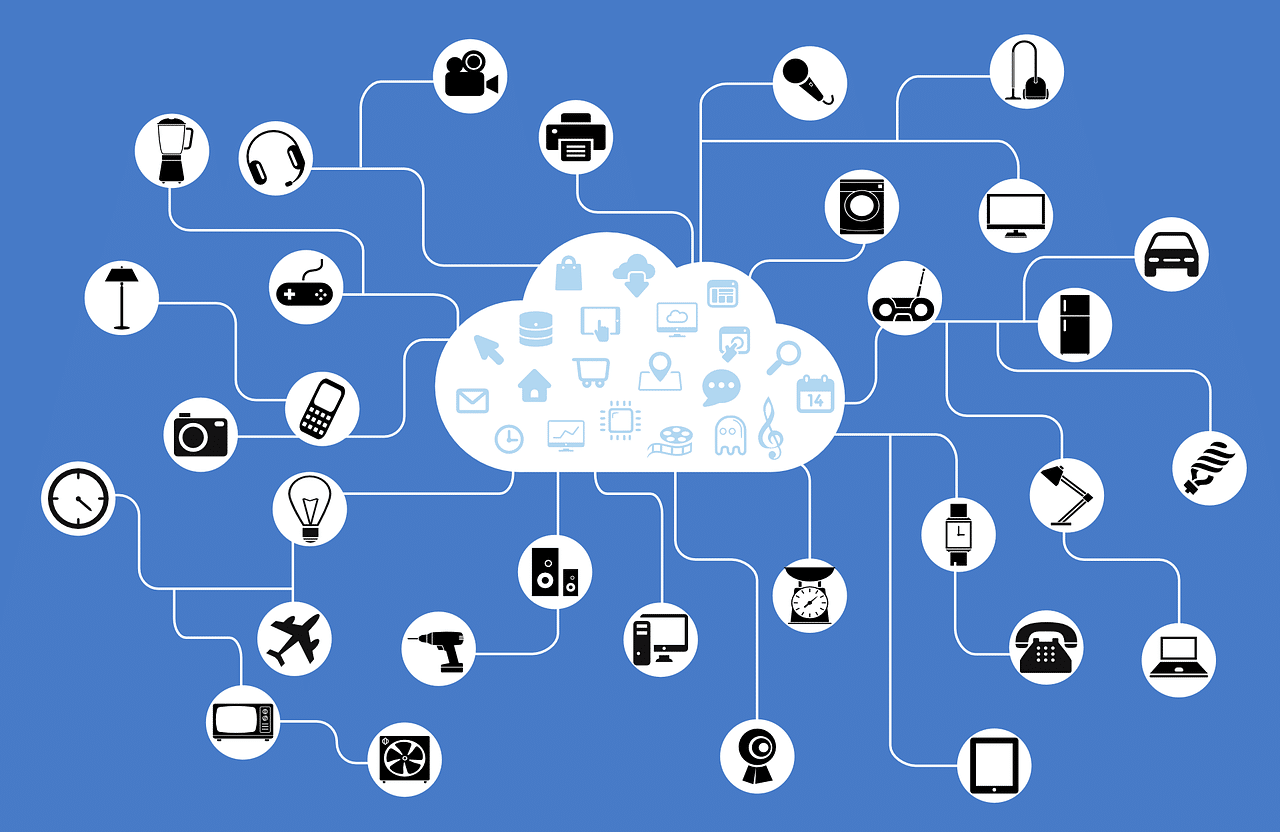
Collecting data with a focus on resale or similar purposes is widespread. You should be especially wary of free apps and services – and particularly those built by companies outside the EU.
Often the data is passed on automatically – and other times it’s a straightforward sale, where databases of personal data are traded.
Among the best-known tools is Google Analytics, for example. This tool is implemented by inserting a piece of code on the website that automatically collects data and helps website owners gain insight into how the site is used.
Fortunately, the EU’s GDPR regulation has pushed companies toward more reasonable practices when they ask us for consent to collect and process our information.
Even so, the data harvest is still enormous. And it’s hard to be sure whether companies are technically limiting data collection and sharing.
Many high-traffic websites ask you to consent to data sharing with up to several hundred partners (BT.dk, for example). Partners that, via code embedded on the website, get told when you visited the page and what you clicked on.
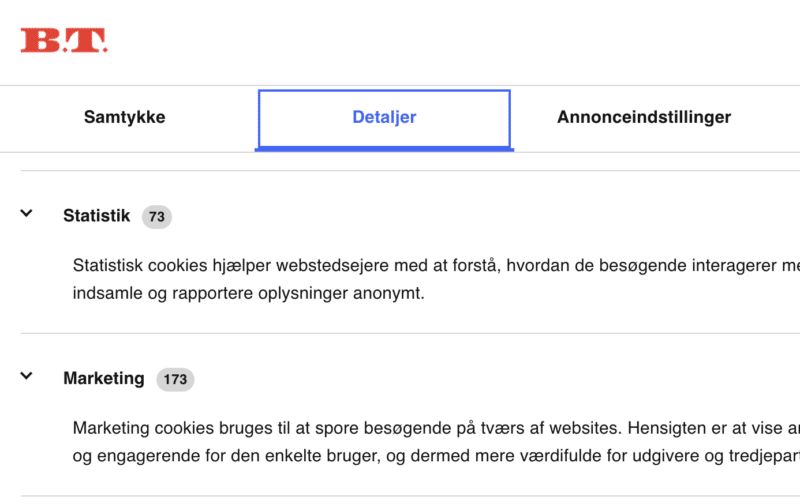
We should generally pause at the words ‘Targeted ad’. Because it indicates that advertisers follow us around websites and in apps based on which sites and apps we use.
We respect your choice
In our online marketing at Onlime.dk, we keep the collection to the smallest amount we can. We use no marketing cookies on Onlime.dk. If you arrive via an ad, we only store the campaign parameters from the link in your browser’s Session Storage until you close the tab, so we can see whether the ad generally led to a sale.
If you’ve clicked on an Onlime ad on Google, Google learns more about you and your interest in Onlime.
But we don’t use that information internally, and we refrain from building a profile on you or using your information in the development of our cloud service and our company in general. So we never make money from personal data.